Why she had surgery
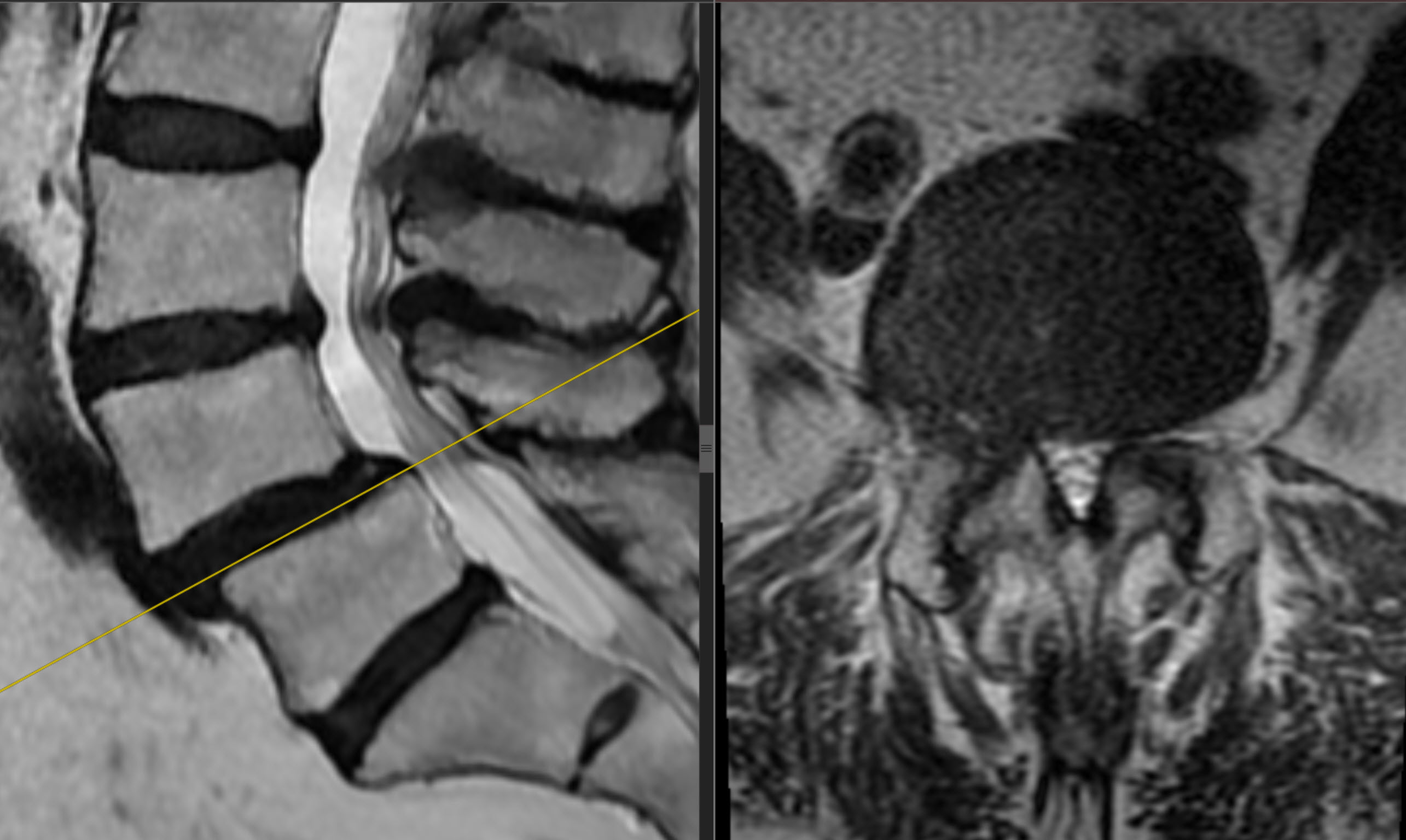
Non-surgical treatment had not helped. The lumbar spinal canal was narrow between L3 and L4 and between L4 and L5. L4 had also slipped forward relative to L5.
What the operation involved
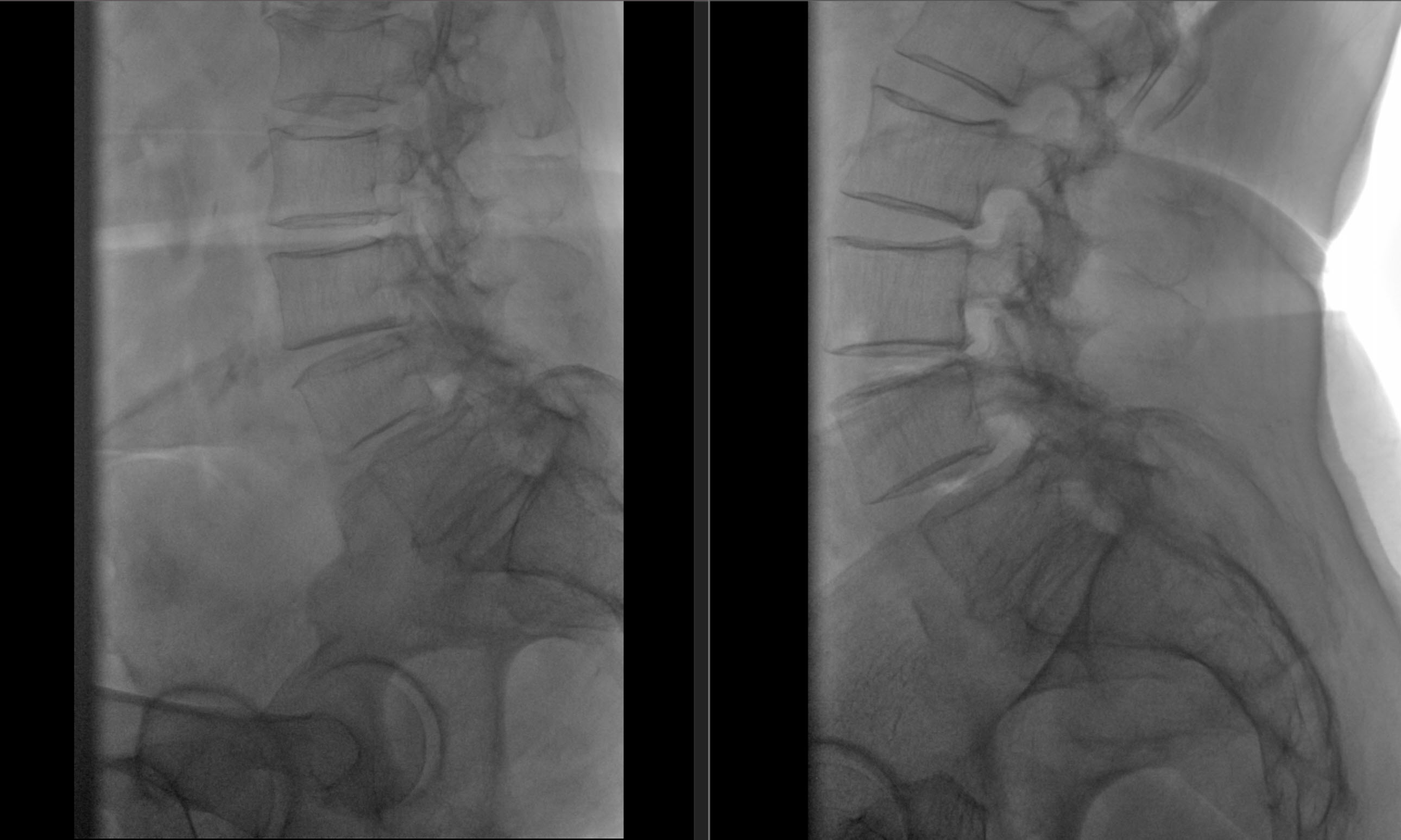
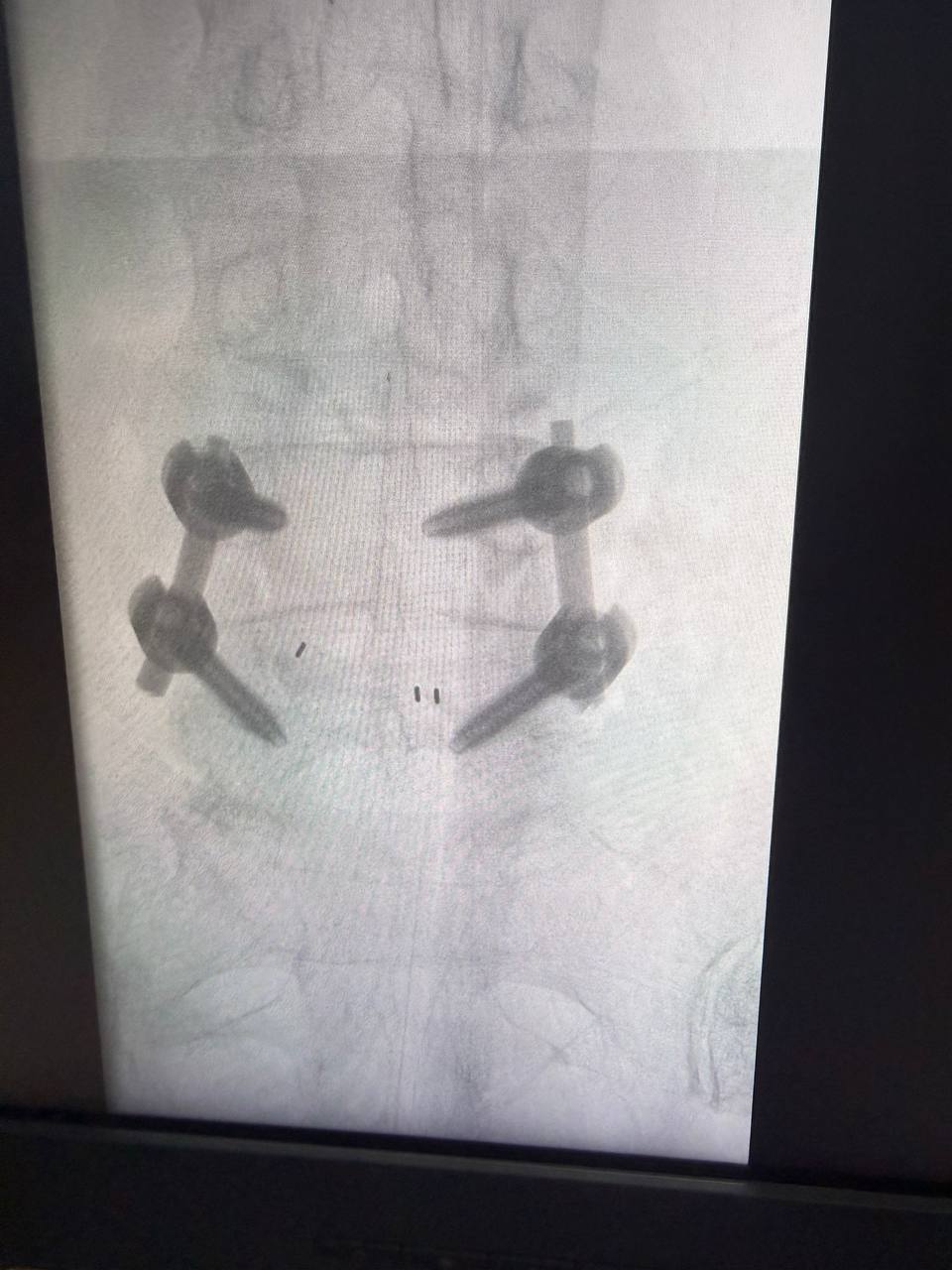
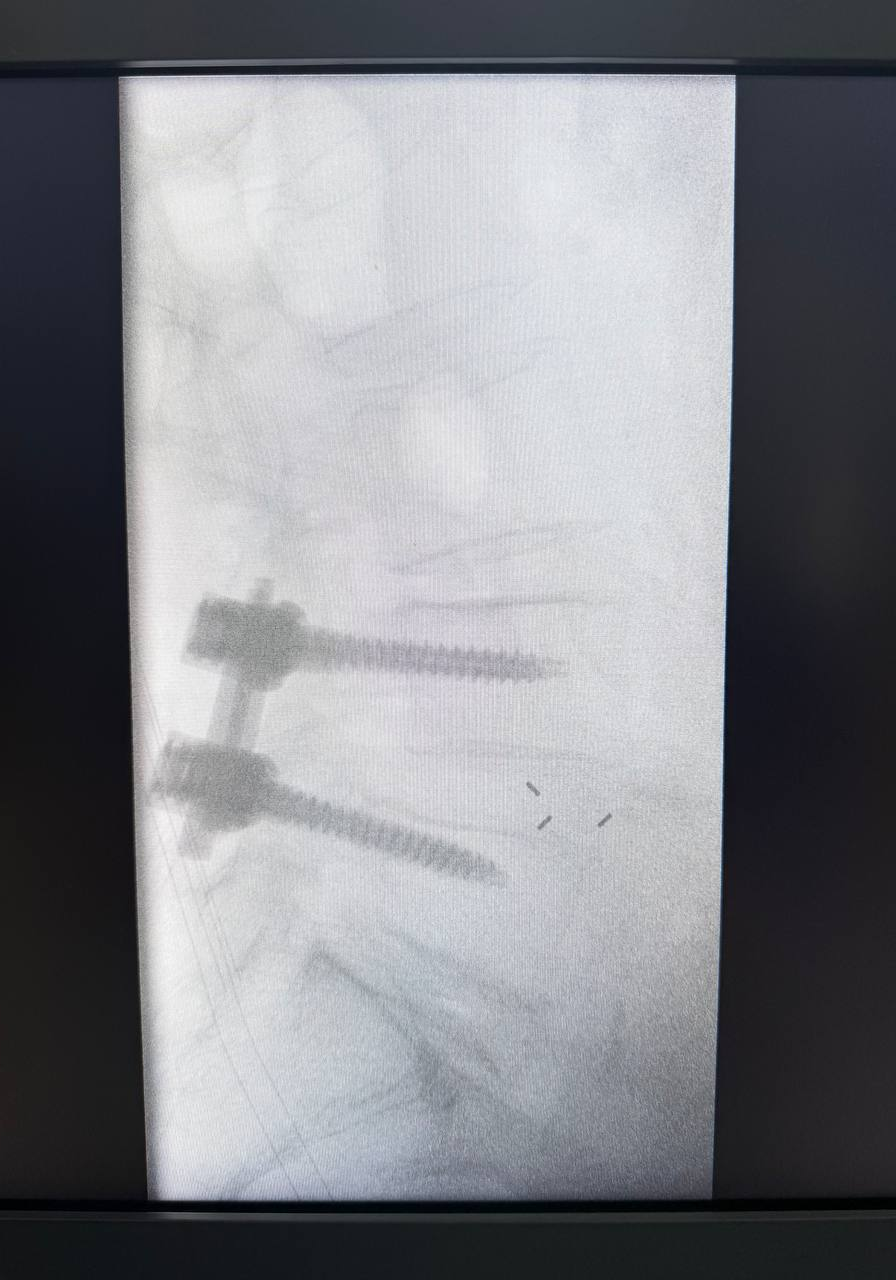
The surgeons used an endoscope to widen the canal at both narrowed levels. At the level of the slip, they placed an implant (an interbody cage) between L4 and L5 and secured the vertebrae with screws.
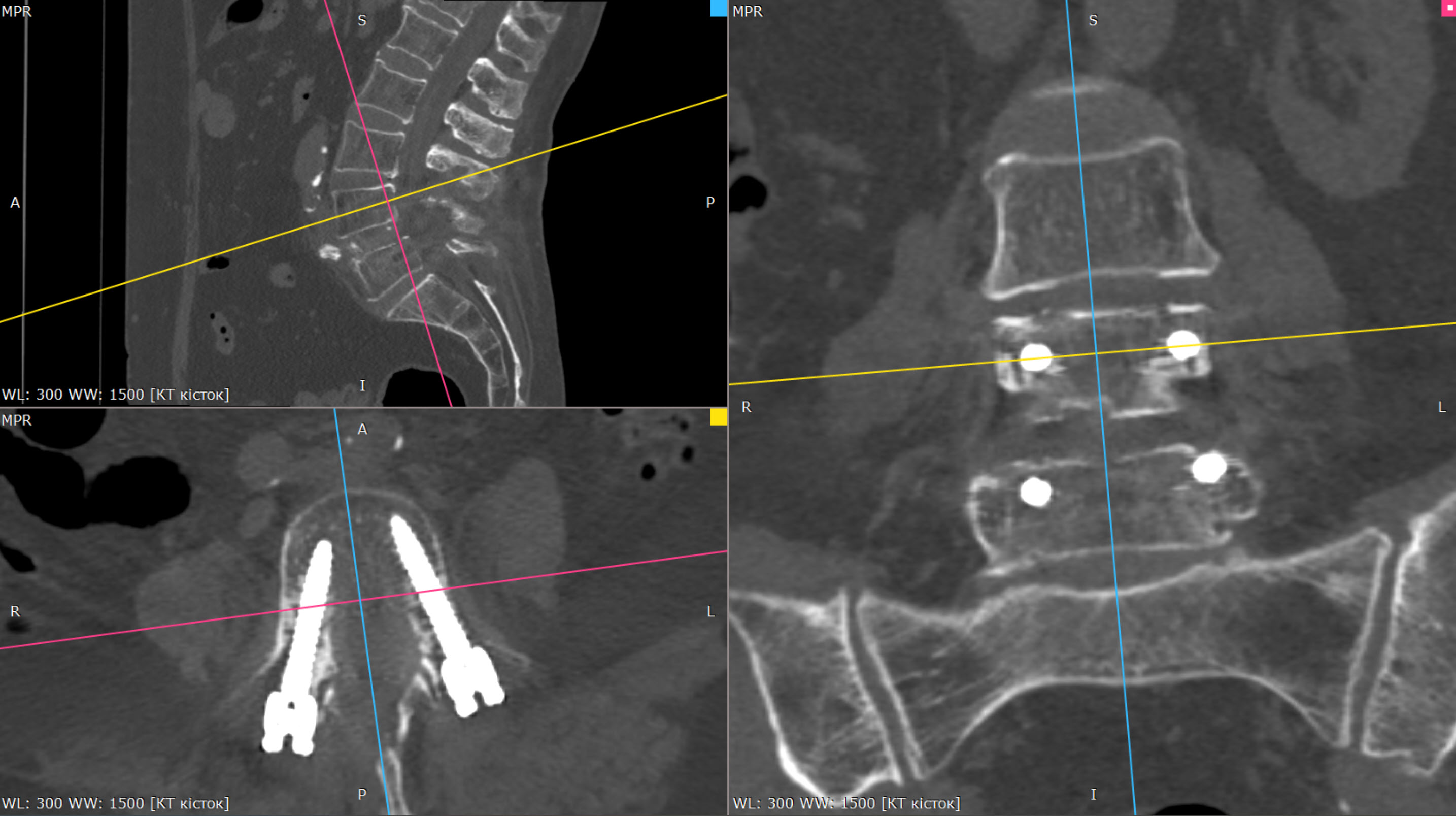
On day five and at one month
By day five she could walk 150 metres. Pain in each leg had fallen from 5 to 2 out of 10. At one month she could walk 400 metres and rated her low back pain at 2/10 and the pain in each leg at 1/10.
| Measure | Before surgery | Day 5 | One month |
|---|---|---|---|
| Low back pain, VAS (0–10) | 6–7 | 4 | 2 |
| Right leg pain, VAS (0–10) | 5 | 2 | 1 |
| Left leg pain, VAS (0–10) | 5 | 2 | 1 |
| Oswestry Disability Index (ODI) | 50 % | 42 % | 16 % |
| Walking distance | 100 m | 150 m | 400 m |
The visual analogue scale (VAS) rates pain intensity from 0 to 10. The Oswestry Disability Index (ODI) measures how much back pain limits everyday activities.
Video
3D reconstruction from the CT scan after L4–L5 fusion. A full 360° rotation in 15 seconds.
Discuss your case with the professor
Send a description of symptoms, previous recommendations and existing investigations. If MRI/CT is available, send complete DICOM studies and reports. Preliminary review by the professor is free.
Send materials to the professor
How to prepare investigations in DICOM format · Book an in-person consultation in Kyiv