Pectus excavatum and pectus carinatum: what is the difference?
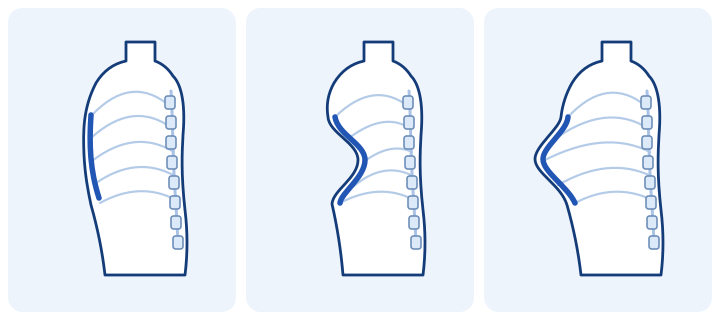
The deformity may become more noticeable during growth. A consultation helps identify correction options in good time.[1]
When to seek a consultation
A marked change in shape is not the only reason to seek advice. It is important to discuss:
- noticeable chest depression, protrusion or asymmetry;
- breathlessness, reduced stamina or discomfort during exertion;
- changes in shape as a child or adolescent grows;
- self-consciousness, avoiding sport or situations where the chest is visible.
How you feel and the effect on everyday life matter alongside external shape. Chest pain, palpitations or breathlessness should not automatically be attributed to the deformity — the doctor assesses possible causes.[1]
How we choose treatment for a chest deformity
We begin with examination: assessing the shape, symmetry and flexibility of the chest wall, growth and symptoms. We discuss exactly what you want to change and which treatment pathway you are prepared to undertake.
When indicated, chest imaging and assessment of respiratory function, the heart or exercise tolerance may be needed. CT or MRI and calculated indices help clarify anatomy; a single number does not replace a complete assessment.[1]
For your first enquiry, prepare the records you already have. You do not need to arrange CT yourself before every consultation.
The Nuss procedure for pectus excavatum
The Nuss procedure is a minimally invasive correction of a sunken breastbone. One or more curved metal bars are placed beneath the breastbone to support the chest wall in its new position. A thoracoscopic camera is used to monitor the inside of the chest.
The incisions are on the sides. Unlike open reconstruction, the standard Nuss technique does not involve extensive removal of deformed costal cartilage. The number of bars and their fixation depend on the shape and rigidity of the chest wall.[2]
Professor Iakiv Fishchenko personally performs Nuss procedures. More on my website about pectus excavatum.
What to discuss before surgery
- The aim of correction: the expected change in shape and, if functional problems are present, the possible effect on how you feel.
- The pain-relief and activity plan: a small approach does not eliminate the need for recovery after reshaping the chest wall.
- The period of support with bars: they remain in place for a defined period, with removal planned as a separate stage.
Surgery is considered after assessing deformity severity, symptoms, investigation results and the effect on life. The appearance of a depression alone does not mean that everyone needs an operation.[1]
When another surgical method is considered
Open Ravitch reconstruction is an option for complex, rigid or certain asymmetrical deformities. It involves correction of abnormal costal cartilage and breastbone position, with support if needed.
This operation may be considered for severe pectus carinatum or when pectus excavatum requires another reconstructive approach. Anatomy and the goals of correction determine the choice between techniques.[3]
Non-surgical correction: a brace and vacuum bell
Compression bracing for pectus carinatum
An individually fitted external brace gradually acts on the protruding area. The best conditions for this treatment are sufficient chest-wall flexibility and willingness to follow the regimen. Seeking advice during growth is especially important, when the chest is more responsive to correction.
A specialist determines wearing times, pressure and duration. Follow-up appointments and brace adjustments are required; do not tighten it further yourself.[4]
Vacuum bell for pectus excavatum
The device creates suction over the depression and lifts the front chest wall. It is considered for selected patients, more often with a milder, flexible deformity. This is a prolonged supervised programme, not a one-off procedure.[5]
Movement, posture and exercise
Individually selected activity helps maintain fitness and posture. However, swimming or strength exercises alone should not be expected to eliminate an established structural deformity.
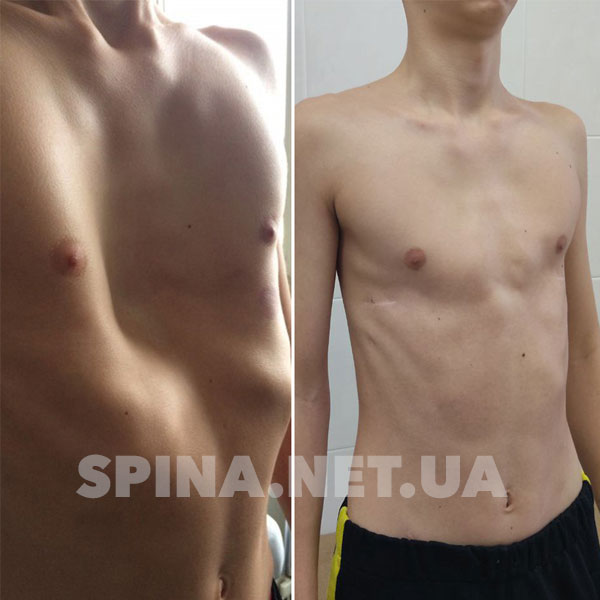
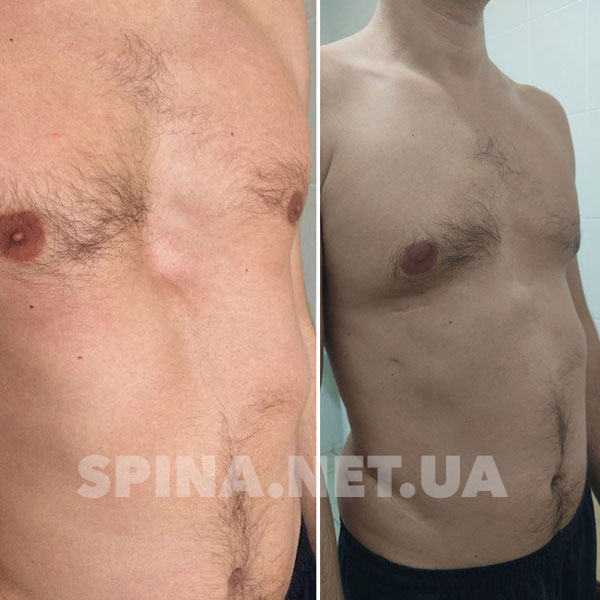
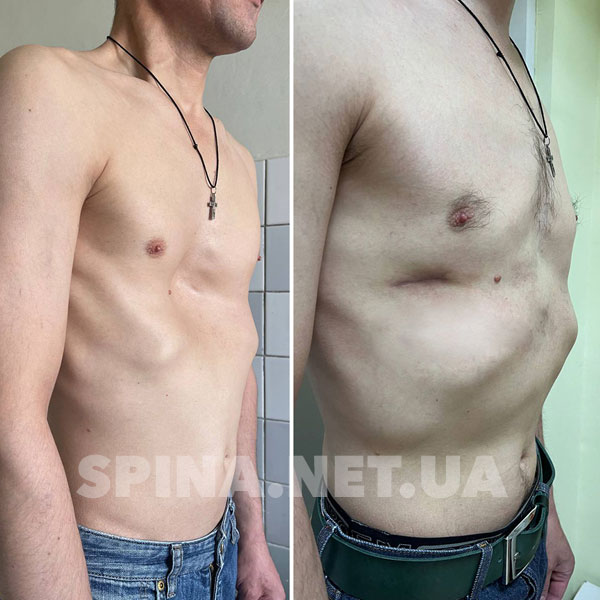
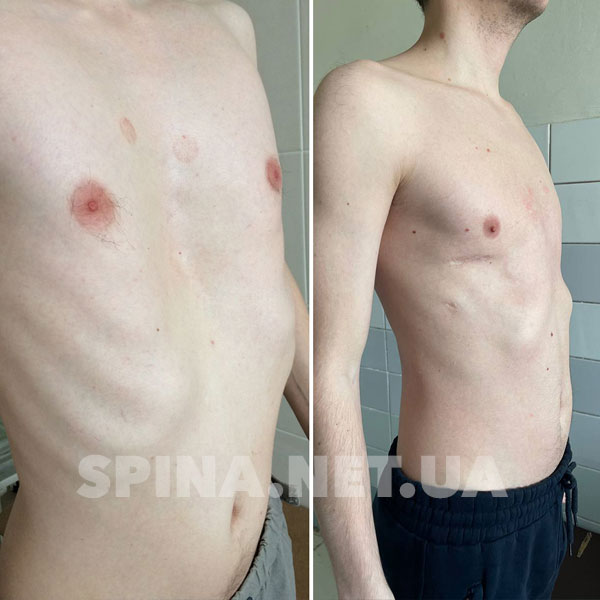
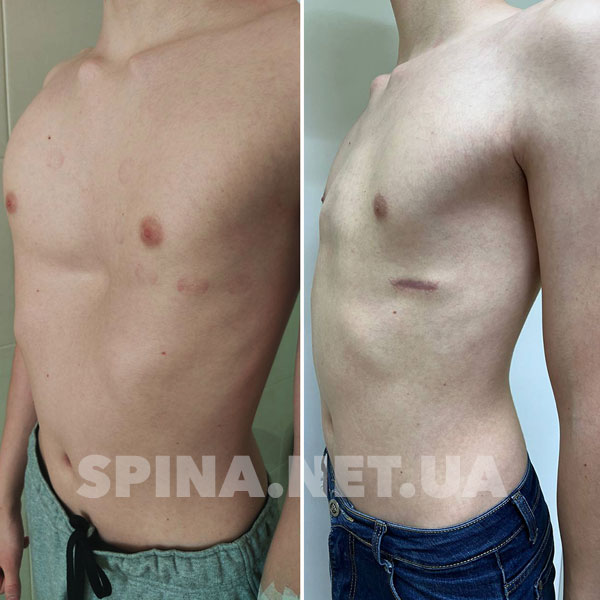
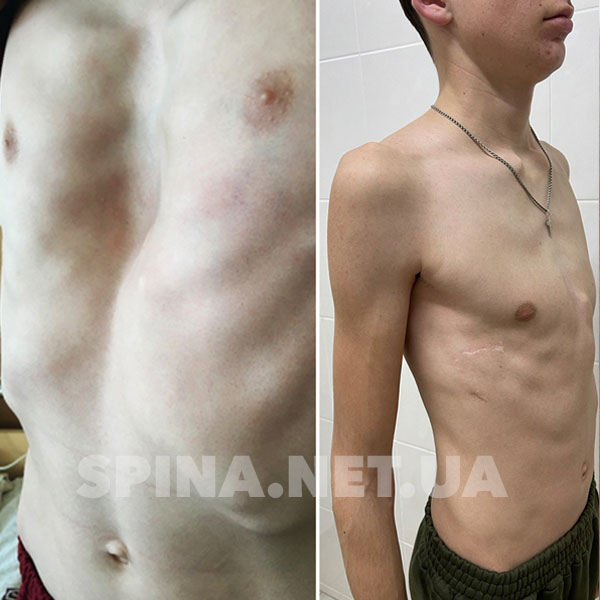
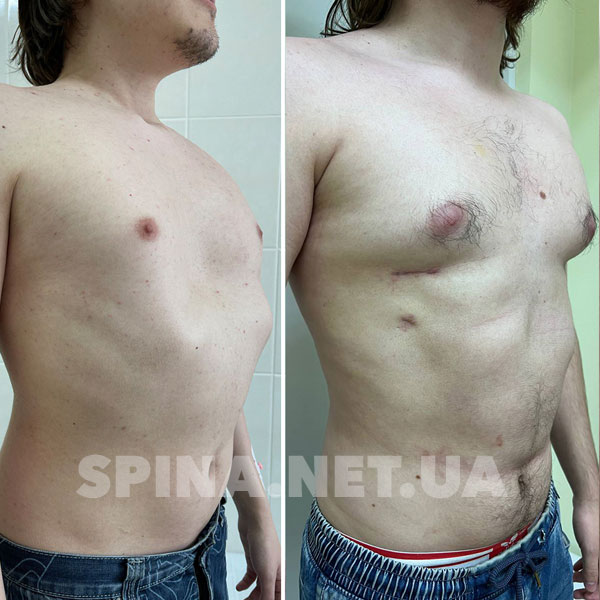
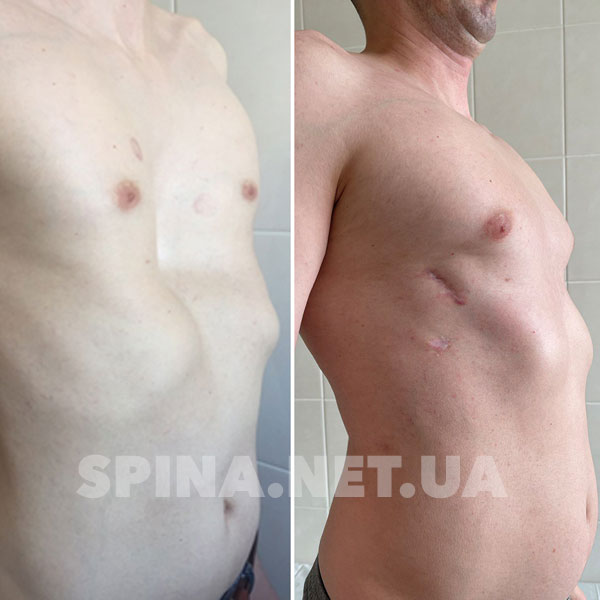
Examples of correction from the website archive
Each image shows the chest before and after treatment. These are individual clinical examples; the expected change in shape is discussed for your case.
Video of surgical treatment of the deformity
The surgical video is age-restricted on YouTube and can be viewed directly on the platform.
Recovery after chest correction
After surgery, pain control, gradual return to movement and appointments according to an agreed schedule are important. We determine separately when you can return to education, work, driving and sport. Contact activities and the risk of a blow to the chest require particular discussion.
Before surgery, we discuss risks including bleeding, infection, bar displacement and injury to structures inside the chest. The patient receives a follow-up plan and clear instructions on seeking help after discharge.[2]
What to prepare for your consultation
- State your age and symptoms. When you noticed the deformity, whether it is changing and how it affects activity and how you feel.
- Include existing records. Previous reports and results of chest, heart or breathing investigations. For CT/MRI already performed, complete DICOM series are needed.
- Tell us about previous treatment. A brace, vacuum bell or operation, their duration and results; include the discharge summary if available.
If needed, photographs of the chest shape can be sent privately through your chosen contact channel. They help preliminary discussion, but chest-wall flexibility is assessed during examination.
How to send existing CT/MRI studies in DICOM format · Contact and appointments in Kyiv
Questions about treating chest deformities
Is surgery always needed?
No. Observation may be sufficient for minor changes. A brace is considered for flexible pectus carinatum, and a vacuum bell for suitable pectus excavatum. Surgery is selected according to the combined indications.
Can the deformity be corrected in adulthood?
Correction is also possible in adults, but chest-wall rigidity and other circumstances affect the choice of operation and recovery. We assess your investigations and expectations individually.
Does the bar stay in place permanently after a Nuss procedure?
It usually supports the correction for a planned period, after which it is removed in a separate procedure. The surgeon determines the timing according to the course of treatment.
Do I need CT before my first enquiry?
No, do not arrange it yourself. First send your existing records and describe the situation. The need for additional investigations is determined at consultation.
Discuss chest correction options
Contact Professor Iakiv Fishchenko to discuss the type of deformity and treatment plan. State your age, symptoms and previous recommendations. Preliminary review of existing records is free.
Medical sources
- Pectus care guidelines, 2024: joint specialist-society recommendations on chest deformities.
- UPMC Children's Hospital of Pittsburgh: pectus excavatum, the Nuss procedure and recovery.
- Children's Hospital of Philadelphia: Ravitch reconstruction.
- Children's Hospital of Philadelphia: external bracing for pectus carinatum.
- Mayo Clinic: diagnosis and treatment options for pectus excavatum.