Do you wake with pain or struggle to find a comfortable position? Before buying a new mattress, assess support, comfort and the condition of your bed. If pain recurs, investigate its cause at the same time: choosing a mattress and treating a spinal condition are different tasks.
What an orthopaedic mattress should provide
The practical aim is a comfortable bed where you can relax, change position and get up without unnecessary difficulty. Assess the specific model and how it feels to you, rather than relying only on the word “orthopaedic” in its name.
A mattress does not remove a herniated disc, release a compressed nerve or correct scoliosis. It can support comfort in daily life, but does not replace assessment and treatment of persistent symptoms. This article considers choices for adults; postoperative recommendations should be agreed with your surgeon.
Soft, firm or medium-firm: where to start
Start your comparison with a comfortable medium-firm mattress. Check for unpleasant pressure on the shoulder or pelvis and whether you can turn comfortably. Compare firmness labels with how the mattress actually feels when you try it.
In a randomised study of 313 adults with chronic non-specific lower back pain without radiating pain, a medium-firm mattress produced better results for pain in bed and activity limitations after 90 days than a firm mattress. This does not prove an identical effect for disc herniation, stenosis, children or postoperative patients.[1]
A diagnosis of “disc herniation” or “osteochondrosis”, or being over 45, does not provide a ready-made formula for choosing. You do not need to endure discomfort simply because a mattress is described as therapeutic.
Sprung or foam: how to compare constructions
Linked and individually pocketed springs
In a linked spring unit, springs are connected to one another. In a pocket-spring unit, each spring has its own fabric pocket. These differences describe construction; the number of springs alone does not determine how comfortable it will be for you.
Foam, latex and combinations of layers
Spring-free models consist of one or more material layers. Memory foam, latex, firm layers and springs may also be combined in one model. Compare the complete mattress: support, surface feel, heat retention and ease of changing position.
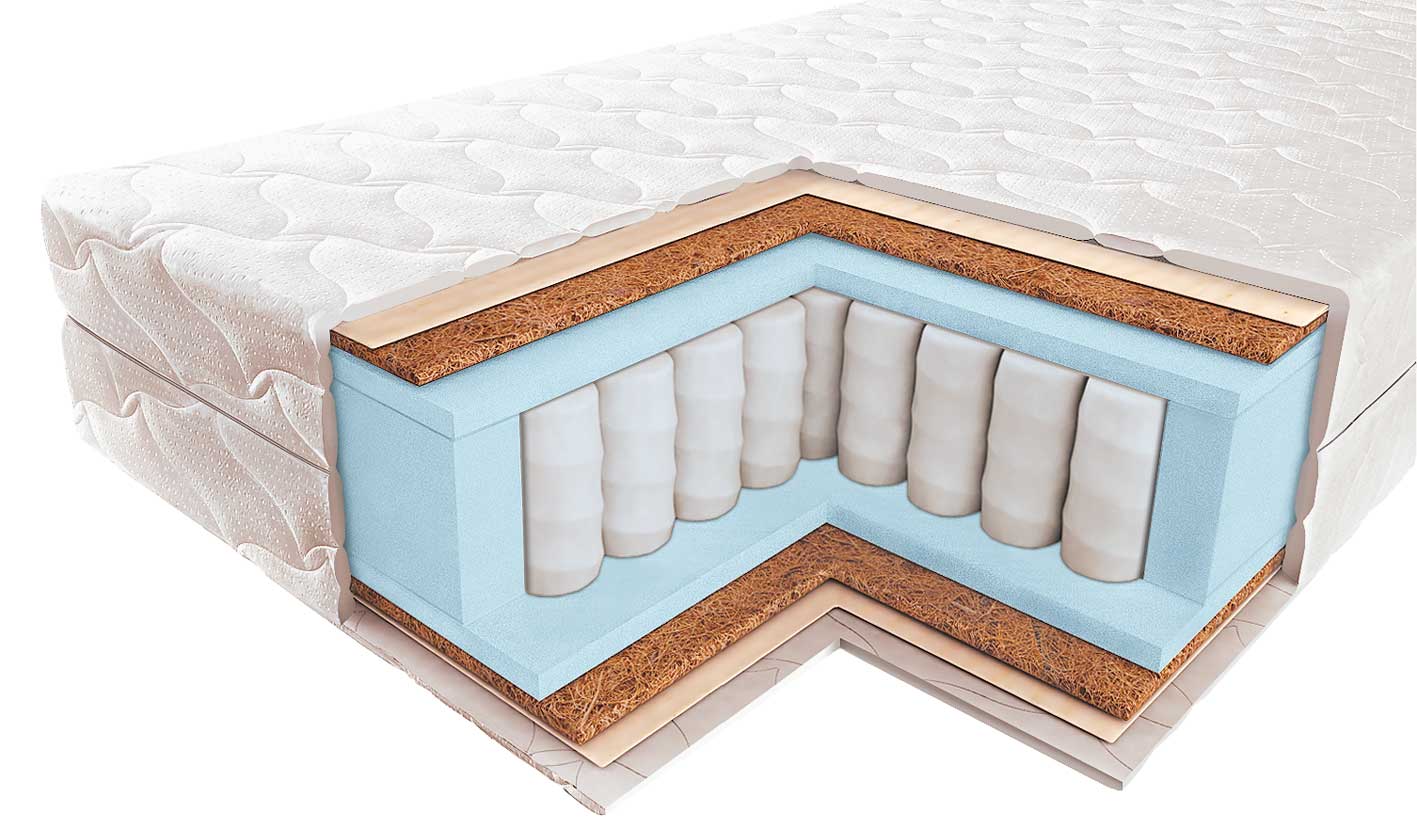
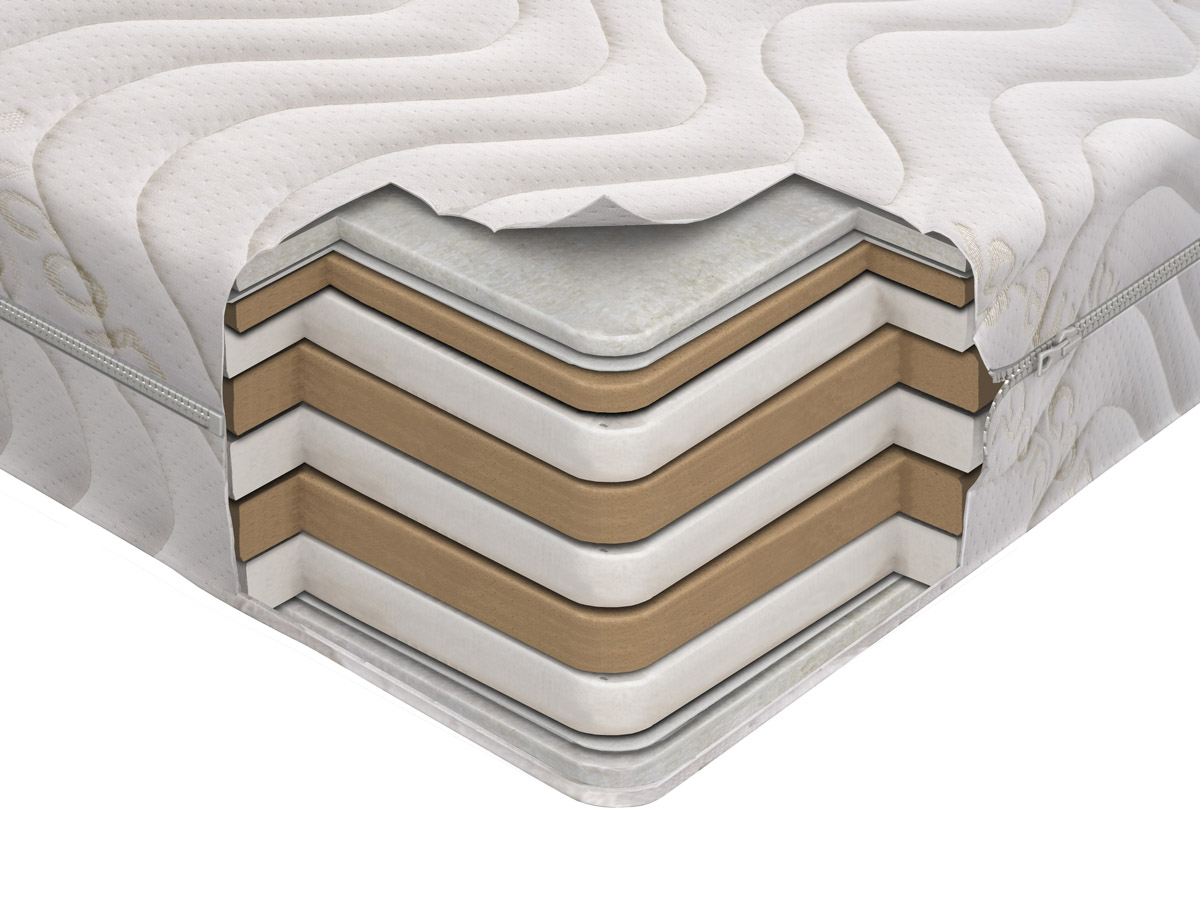
Another randomised study of adults with chronic lower back pain compared waterbeds, contoured foam mattresses and firm mattresses over four weeks. Differences were small, and participant withdrawals limit the conclusions. This does not justify declaring one material best for everyone.[2]
Size, bed base and partners of different weights
- Room to move. Make sure you can lie in your usual position and turn without reaching the edge or disturbing your partner.
- Compatibility with the base. Check the size, base type and slat spacing against the manufacturer's requirements for the specific model.
- Weight capacity. Check the documented capacity for each sleeping position, without universal rules about a particular number of kilograms.
- Comfort for both people. Try the mattress together. If your preferences differ, compare models with separate firmness choices for each side or separate mattresses.
The number of zones, thickness, “natural” filling or high price does not replace these checks. Ask what the layers contain, how to care for the product and exactly what the warranty covers.
Five checks before buying
- Inspect your current bed. Are there visible dips, damage or a problem with the bed base?
- Try your usual positions. Lie on your side and back if those are your sleeping positions, with a comfortable pillow. Assess pressure on your shoulders and pelvis.
- Turn and get up. Check whether you can easily change position, sit on the edge and stand up.
- Clarify home-trial terms. Are exchange or return possible, within what period and under which conditions? Do not assume they are automatically included.
- Assess it in everyday use. If there is a trial period, monitor sleep quality, how you feel in the morning and comfort, rather than only your first impression in the shop.
This is a practical buying checklist, not a treatment protocol. If pain is severe, do not postpone a consultation while searching for the “perfect” model.
Your pillow and sleeping position matter too
You can try simple options and keep the one that feels more comfortable:
- On your side: bend your legs slightly and place a pillow between them.
- On your back: try a pillow beneath your knees; the pillow beneath your head should support your neck comfortably.
- On your stomach: if this position increases discomfort, try another comfortable position.
Changing position may reduce strain on the back, but you do not need to force yourself to hold one posture all night. After surgery, follow your individual recommendations.[3]
Posture exercises with technique explained · Common stretching mistakes
When back pain needs a separate assessment
Seek a consultation if pain does not improve over several weeks, interferes with usual activities, does not settle with rest or worsens at night. Do not attribute every such symptom to the mattress.[4]
Emergency care is needed for new bladder or bowel problems, loss of sensation in the saddle area, or pain with new weakness or numbness in both legs. Do not wait for a reply in a messenger.[4]
My specialisation is endoscopic spine surgery. If pain travels into a leg or arm, there is numbness, or a herniated disc or stenosis has already been identified, discuss your symptoms and previous treatment results with me. At the consultation, we establish the cause of symptoms and the next steps.
Endoscopic removal of a lumbar disc herniation · Cervical disc herniation: surgical options · Lumbar stenosis
Discuss back pain with the professor
Send Professor Iakiv Fishchenko a description of your symptoms: when pain occurs, where it travels, what disrupts sleep and what treatment you have had. Include existing reports and investigations; send complete MRI/CT studies in DICOM format if already available. A new investigation is not required just to contact us.
Preliminary review of materials by the professor is free. If needed, we will arrange an in-person consultation in Kyiv and the next steps.
Send materials to the professor
How to send investigations in DICOM format · Contact and appointments · All blog articles