Can scoliosis be corrected while preserving spinal movement? Dynamic correction uses a flexible tether without planned vertebral fusion. Professor Iakiv Fishchenko will assess your images, remaining growth and curve flexibility to discuss the possibilities of VBT/ASC and other treatment options.
Adolescent idiopathic scoliosis: what needs assessment?
Idiopathic scoliosis is a three-dimensional spinal curve with vertebral rotation, whose cause is not attributed to a specific established disease. It can appear as uneven shoulder height, waist asymmetry or prominence of a shoulder blade or ribs on one side.
The course of the deformity varies. Assessing the risk of curve progression during rapid growth is particularly important. This requires examination, standing X-rays and information about previous changes.[1]
The consultation aims to determine the next step: observation, bracing or planning surgical correction.
VBT and ASC: how dynamic correction works
Fixation anchors are placed in the vertebral bodies and connected with a flexible tether. Its tension helps change the curve's shape. The construct is intended to preserve movement in the involved segments without planned bony fusion.
VBT was developed as a method of growth modulation. Its indications in growing children cannot automatically be applied to all patients whose growth is complete.[3] In my practice, I consider ASC for carefully selected adolescents and adults.
Who may be suitable for surgery without fusion?
Planning begins with analysis of the whole spine, not just the largest curve. We assess:
- Type and magnitude of the curve: the Cobb angle, rotation and sagittal profile.
- Flexibility: how much the curve changes on special images.
- Remaining growth: skeletal maturity, which affects subsequent correction.
- Balance and segment condition: trunk position, discs, bone quality and previous procedures.
- Course and previous treatment: changes in the curve over time, brace use and observation results.
Motion-preserving surgery requires careful selection. For VBT systems in growing children, progression and the outcome or tolerability of bracing are among the factors assessed.[4]
Movement after correction: what we discuss before surgery
Preserving the ability to move is one of the main aims of the dynamic approach. The expected movement and shape correction depend on curve type, surgical levels and the condition of the spine.
Before choosing a method, we also discuss possible overcorrection, tether damage, loss of some correction or the need for revision surgery. Follow-up examinations remain necessary after a successful initial result.[3][4]
When we discuss correction with fusion
For deformities in which a tether construct does not meet treatment aims, correction with rigid fixation and fusion is considered. Screws and rods hold the spine in the planned position, while bone graft material supports fusion.
Movement is limited in the fused area. Planning must identify the necessary levels and preserve function in the unfused segments. This operation can provide lasting correction and allow return to an active life through an agreed recovery plan.[5]
The decision to operate is not based on a single Cobb angle. Curve shape, progression risk, growth, expected benefit and surgical risks are considered.
Dynamic correction and fusion: an overview of surgical options
Observation and bracing during growth
Some adolescents need observation with examinations and follow-up images on an individual schedule. For suitable curves in patients who are still growing, a brace is used to reduce the risk of progression.
The BrAIST study showed the benefit of bracing in selected adolescents at high risk of curve progression. The result was associated with adherence to the wearing schedule; this does not guarantee complete straightening.[6]
Specific exercises can supplement the treatment plan. The need for a brace, its type and wearing schedule are determined by growth and deformity characteristics.[2]
Which images to send for consultation
- Existing standing X-rays of the entire spine in frontal and lateral views. Include reports and dates.
- Previous images to assess changes in the curve, and existing bending views if available.
- Age, growth history and previous treatment: the brace, wearing schedule, exercises and previous consultations.
- Other existing investigations: complete MRI/CT series in DICOM format and postoperative discharge summaries.
Additional flexibility images, MRI or CT are ordered for a specific purpose. You do not need to arrange every investigation yourself before your first enquiry.[1][5]
Preliminary review of investigations by the professor is free.
How to send existing CT/MRI studies in DICOM format · Consultation in Kyiv: contacts and booking
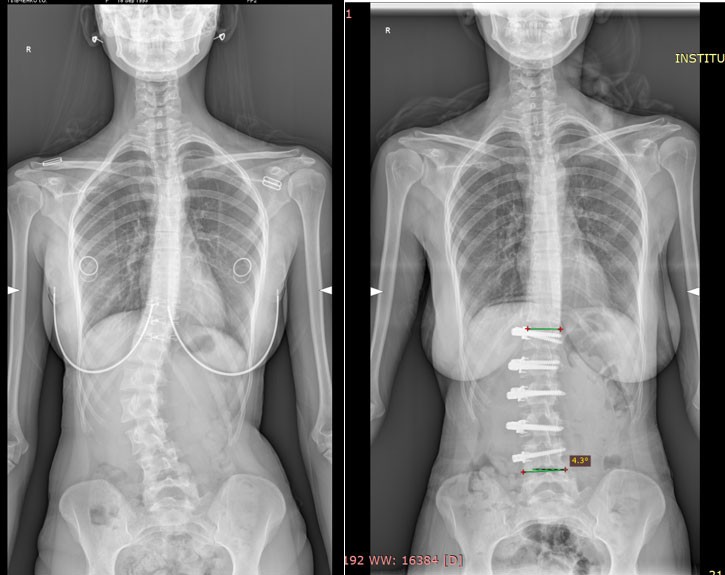
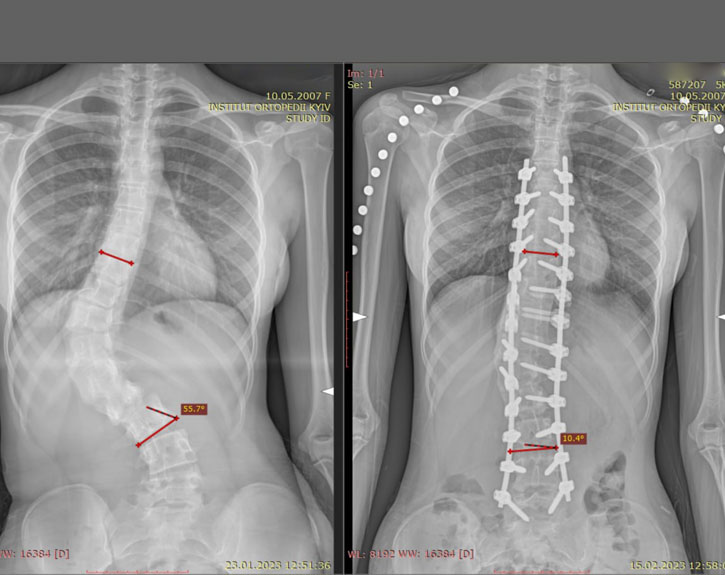
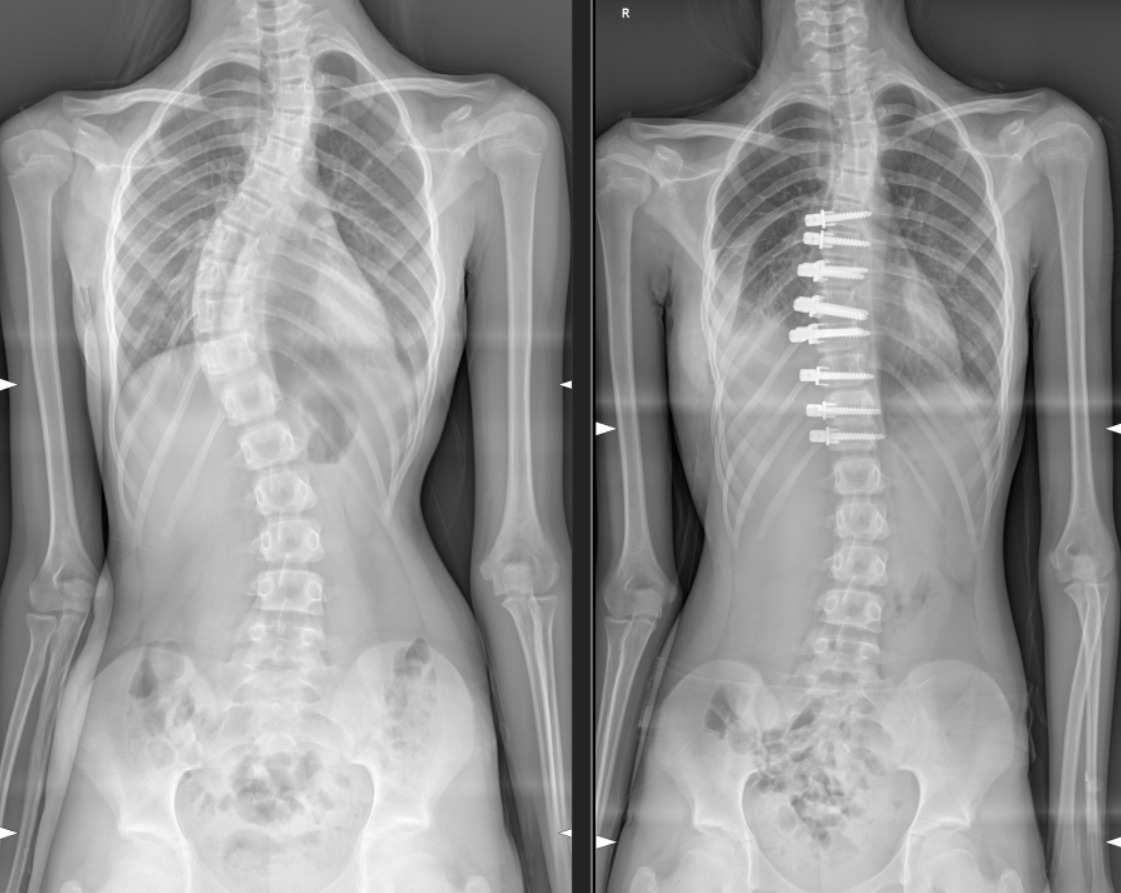
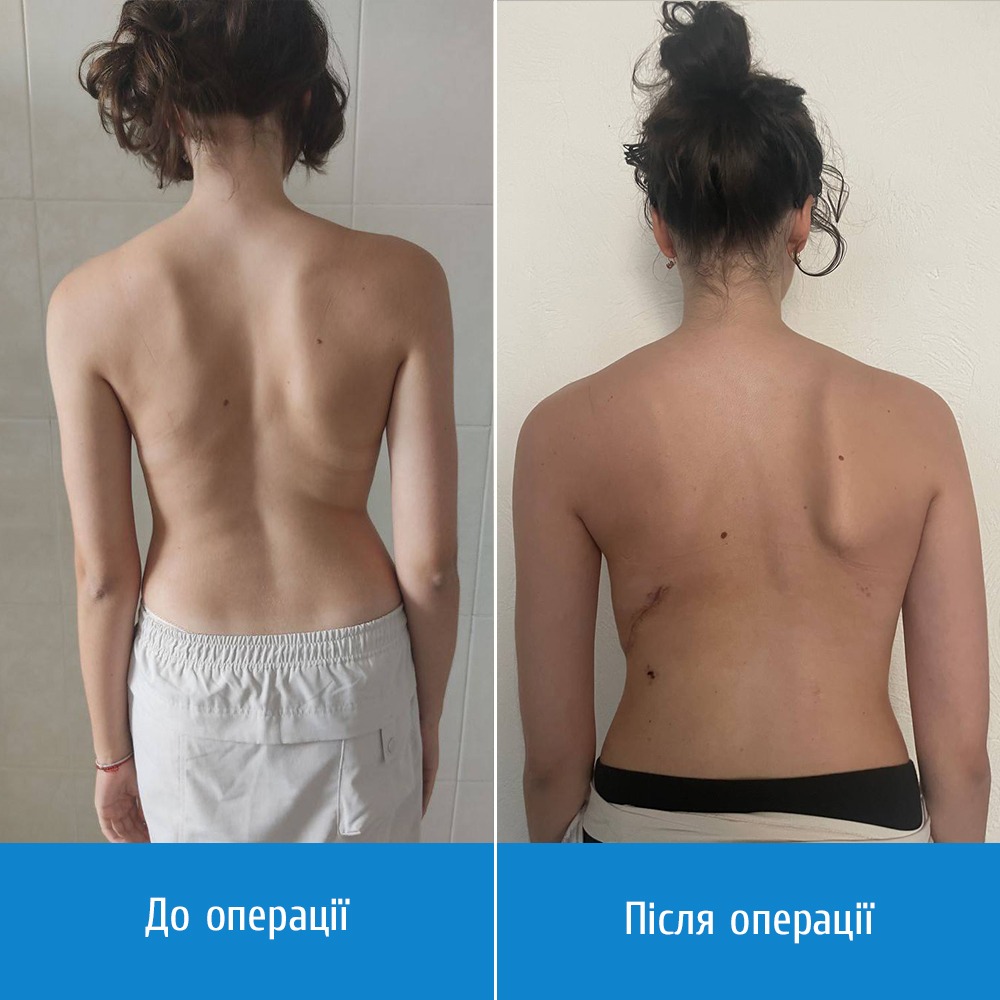
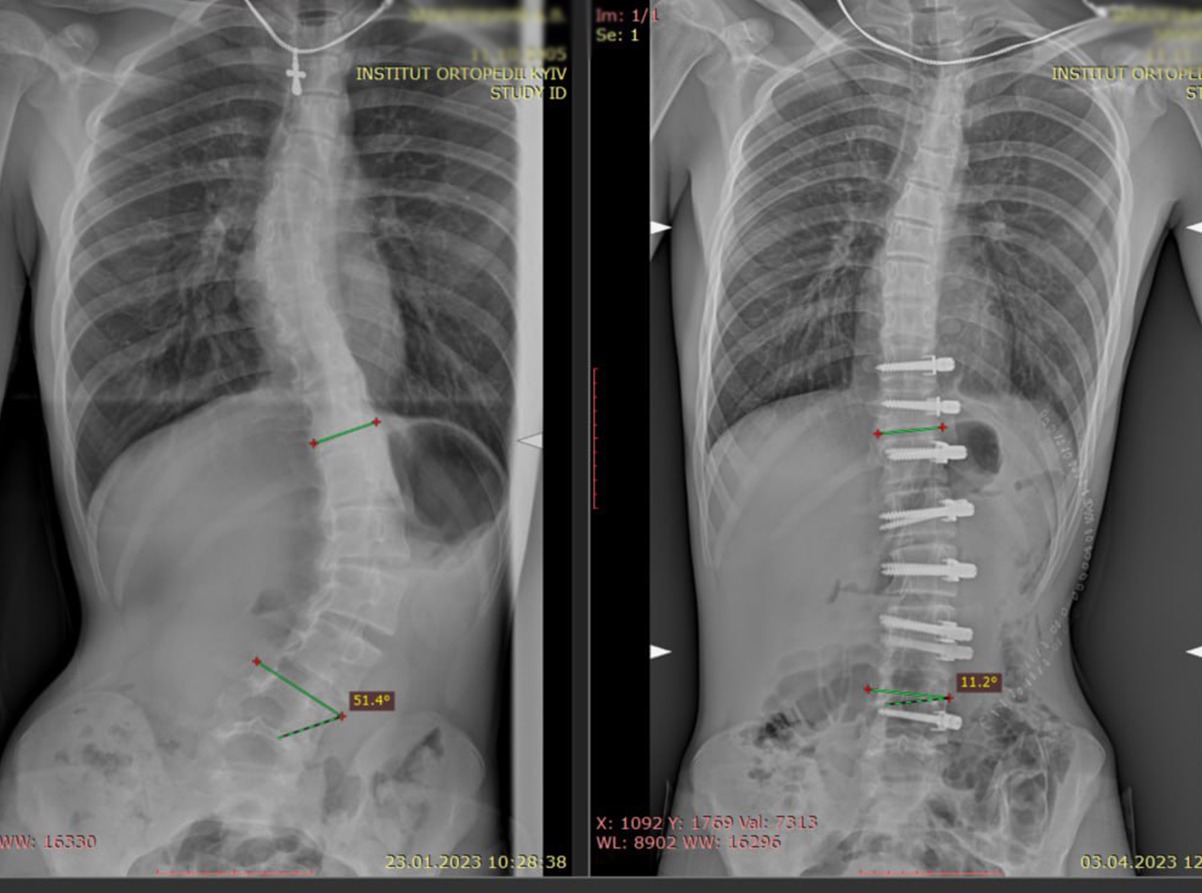
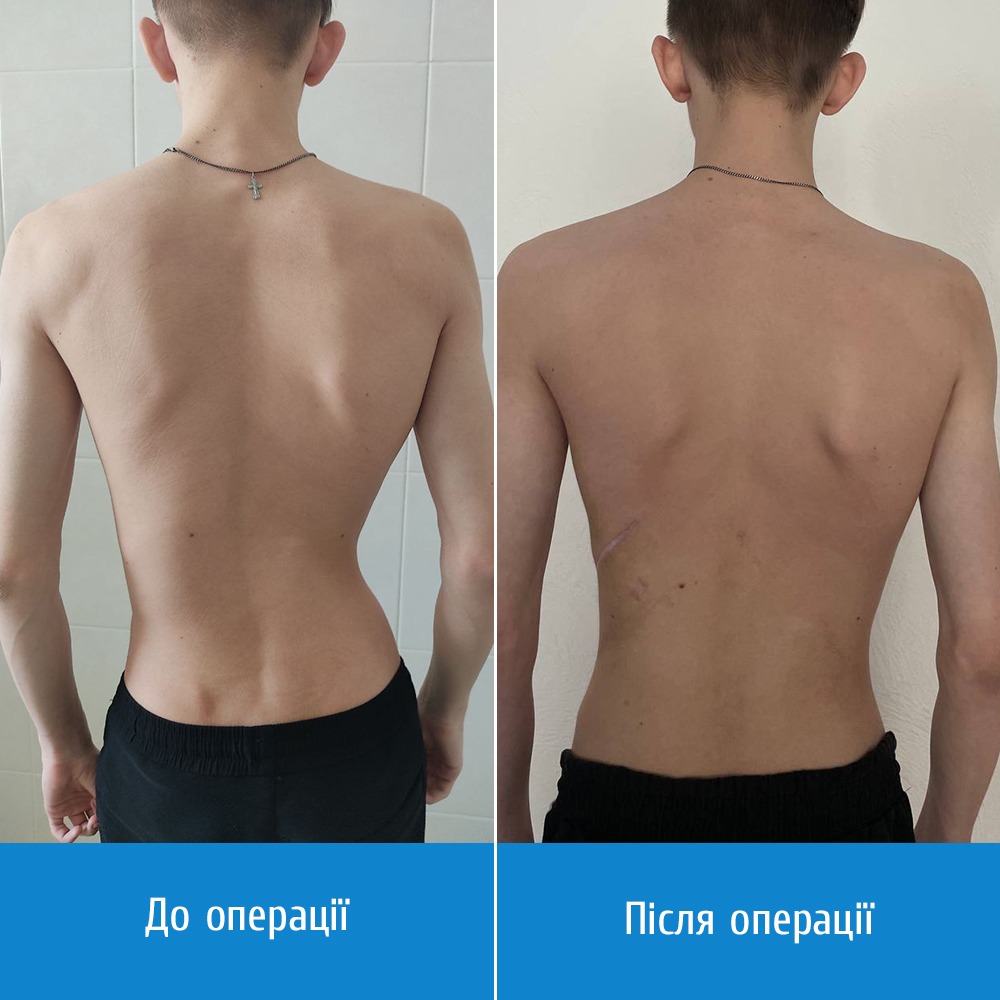
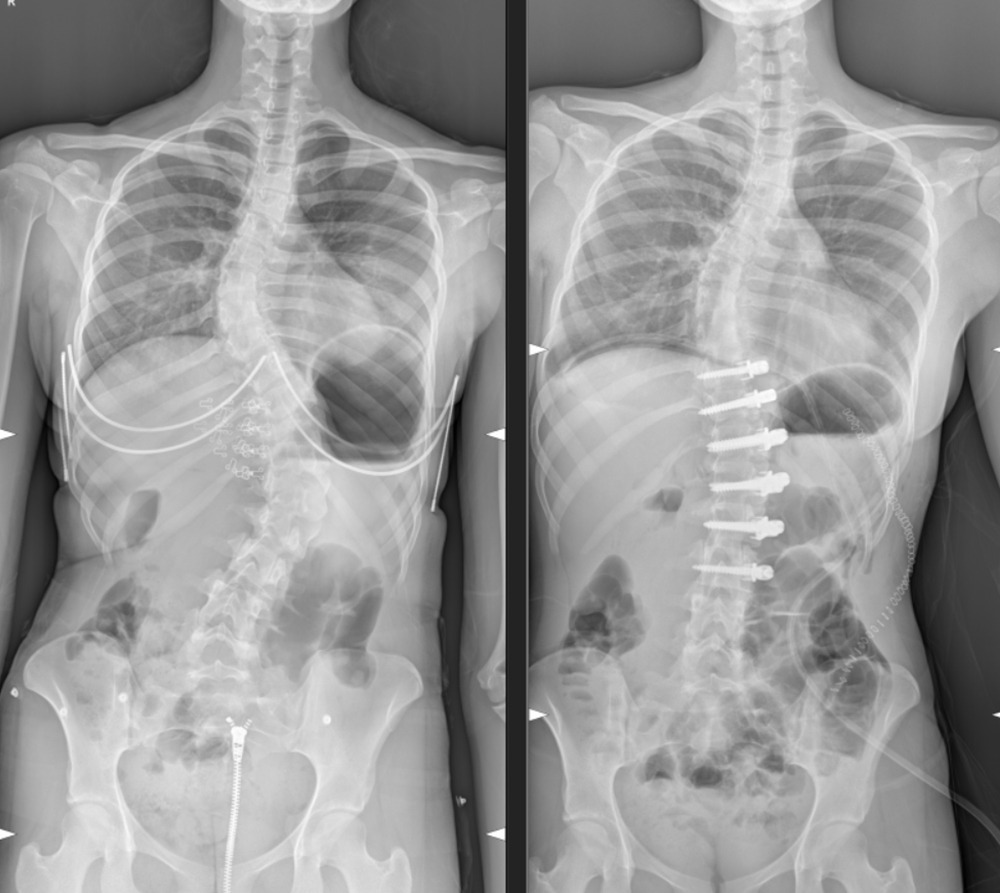
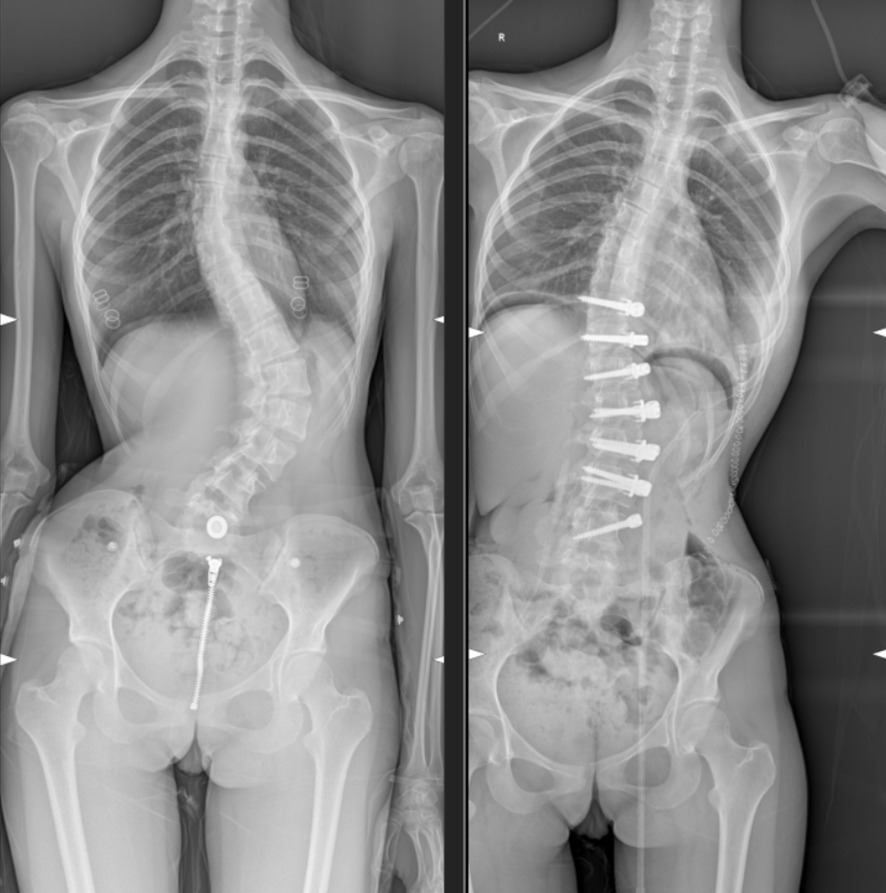
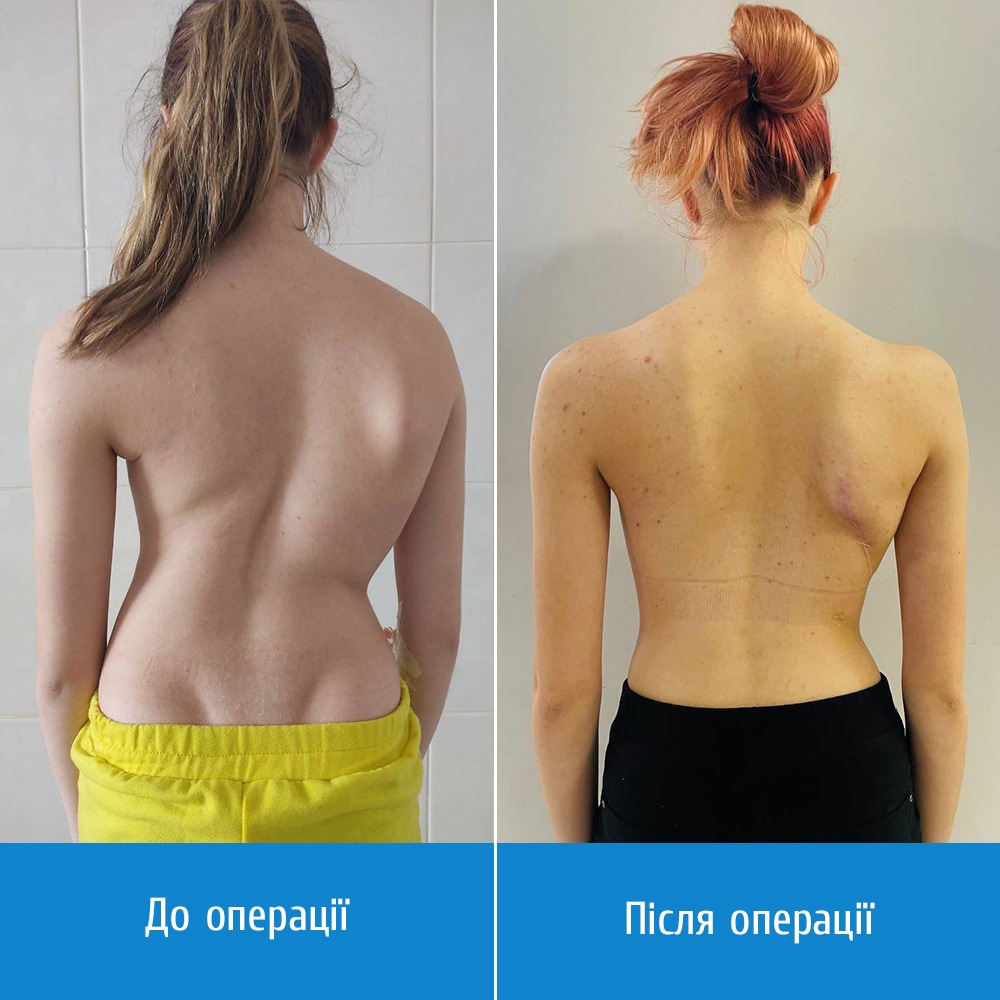
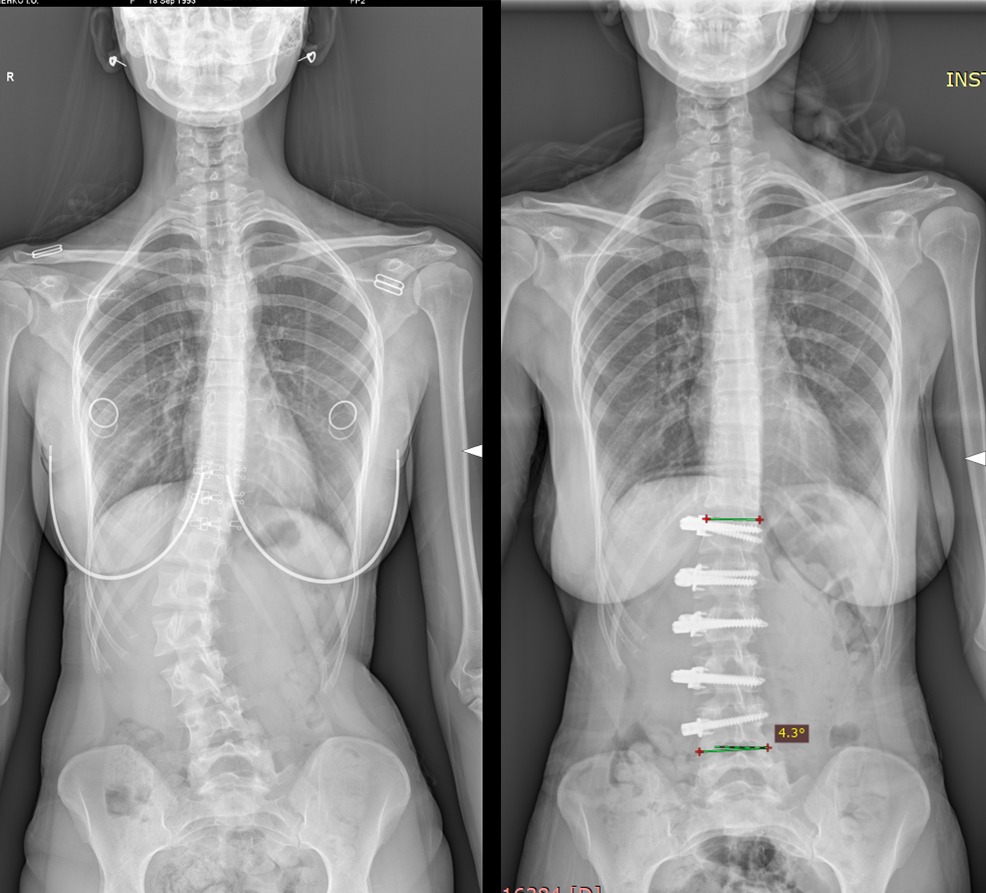
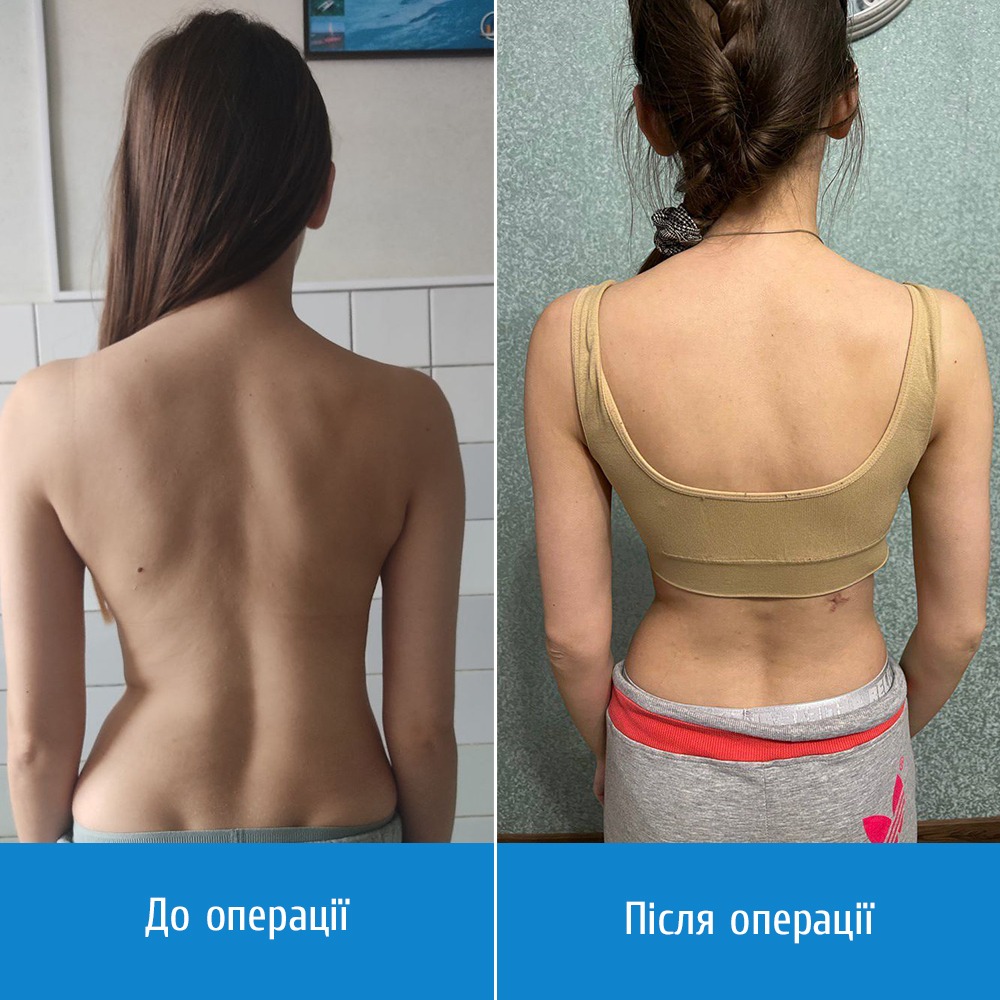
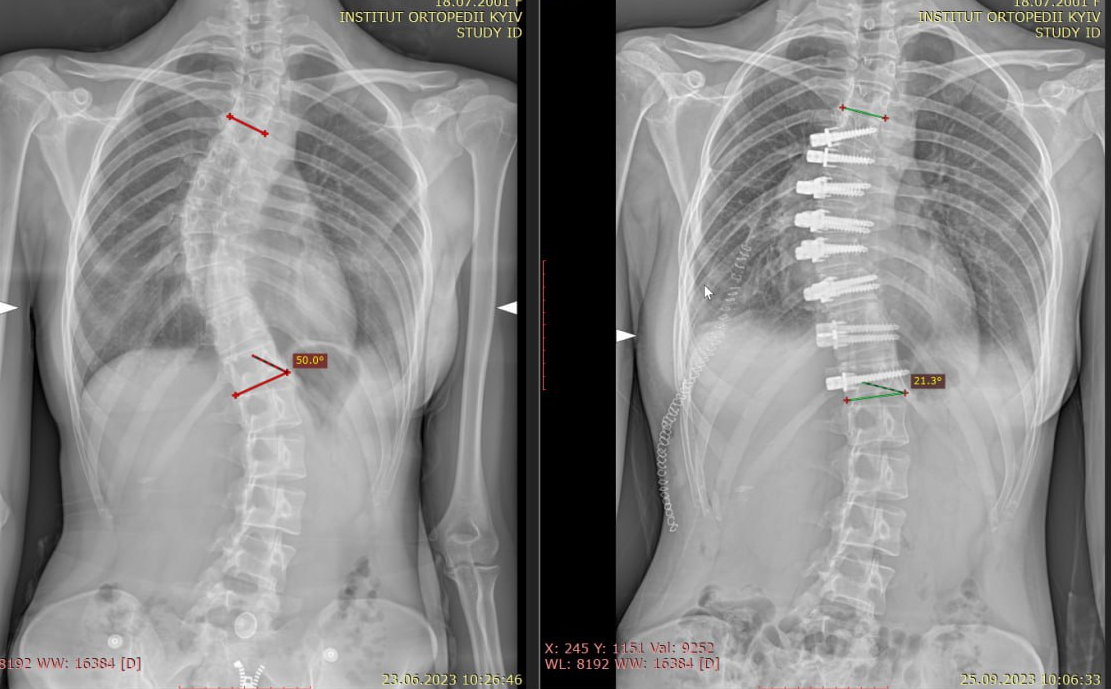
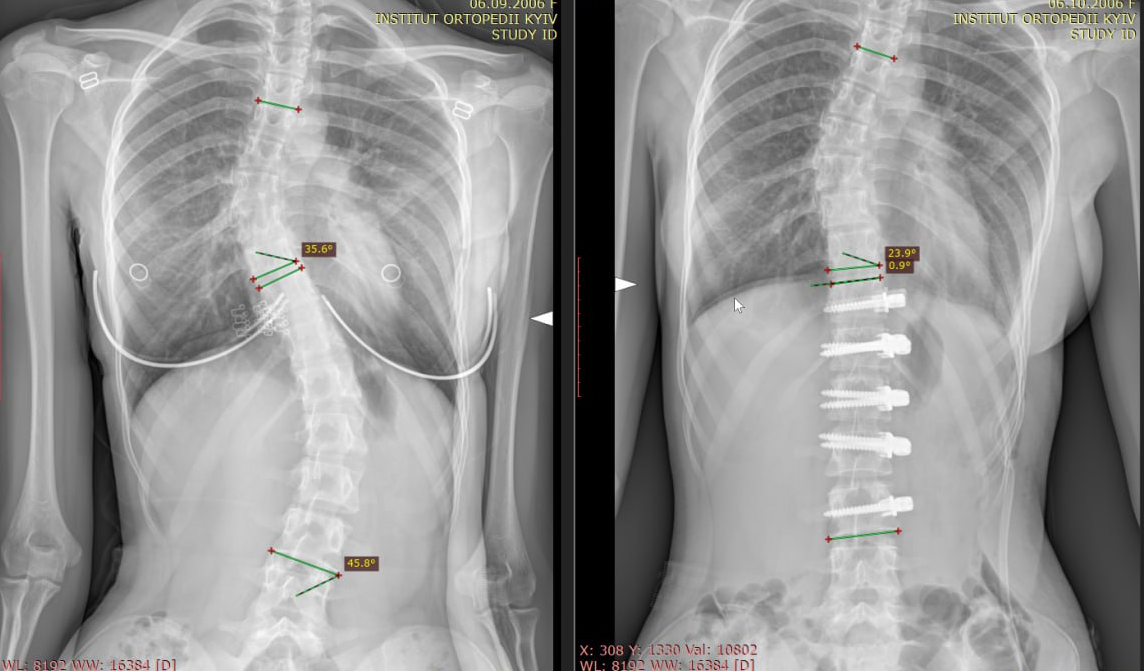
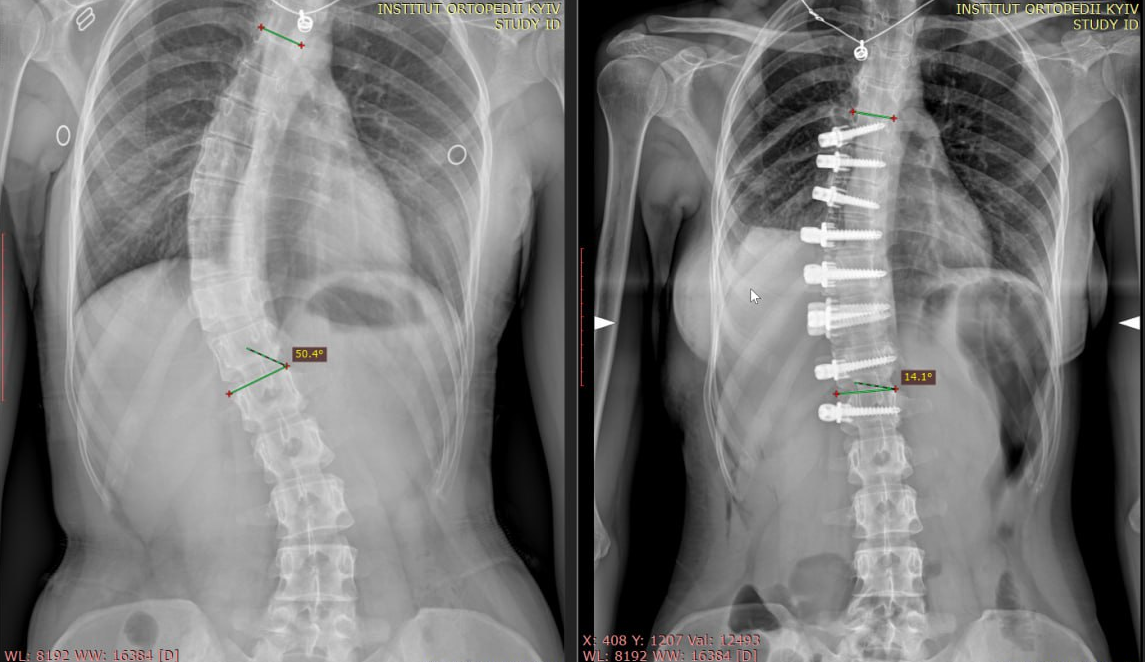
Archive examples of scoliosis correction
The gallery shows different forms of instrumented correction from the previous version of the site. Individual images and photographs help discuss changes in shape; the method and expected result for you are determined through an individual plan.
From surgery to an active life
We agree in advance on pain relief, gradual mobilization and follow-up schedules. Return to school, work, training and contact sports depends on the selected operation and the course of recovery.
The ability to move after dynamic correction does not mean immediate permission for all activities. The patient receives a specific activity plan, while follow-up investigations help assess the construct and correction.[3][5]
Questions about VBT/ASC for idiopathic scoliosis
How does VBT differ from ASC?
Both approaches use a flexible tether. VBT is associated with correction through a child's subsequent growth, whereas ASC emphasises correcting the deformity during surgery. Remaining growth matters when choosing management.
If the curve is flexible, is dynamic correction definitely suitable?
Flexibility is an important criterion. We also assess curve type, sagittal profile, growth, segment condition, balance and previous treatment.
Do all adolescents with scoliosis need surgery?
No. Observation or bracing during growth is sufficient for some. Surgery is discussed according to the combination of indications and the course of the deformity.
Can ASC be considered after growth is complete?
This possibility is assessed separately in carefully selected patients. Indications for growth-modulating VBT do not replace individual ASC planning.
Discuss dynamic scoliosis correction with the professor
Send Professor Iakiv Fishchenko existing standing whole-spine X-rays. We will review possibilities for preserving movement, the need for bracing or another surgical option. Preliminary review is free.
Medical sources and the professor's resources
- Scoliosis Research Society: adolescent idiopathic scoliosis, investigations and its course.
- AAOS OrthoInfo: idiopathic scoliosis in children and adolescents.
- Scoliosis Research Society: VBT and motion-preserving technologies.
- FDA, 2026 review: The Tether, patient selection and follow-up after VBT in the USA.
- AAOS OrthoInfo: scoliosis surgery and recovery.
- Weinstein et al., NEJM, 2013: the BrAIST bracing study.