Published:
A clinical case from Professor Iakiv Vitaliiovych Fishchenko's practice
In a 72-year-old patient, L3–L4 lumbar spinal stenosis caused low back and bilateral leg pain, weakness when walking and a walking distance limited to 200 metres. Conservative treatment was unsuccessful. Professor Iakiv Fishchenko performed L3–L4 biportal endoscopic decompression.
By the first day, the patient was walking and exercising. Pain and neurological symptoms had decreased by discharge on the second day.
The patient's presenting symptoms
Low back pain radiated along the lateral aspects of both thighs and lower legs. Symptoms had persisted for many years, with marked deterioration during the last year.
Weakness developed after a short walk; the patient could walk up to 200 metres. Pain increased with standing, walking and physical activity. Body mass index was 34.3.
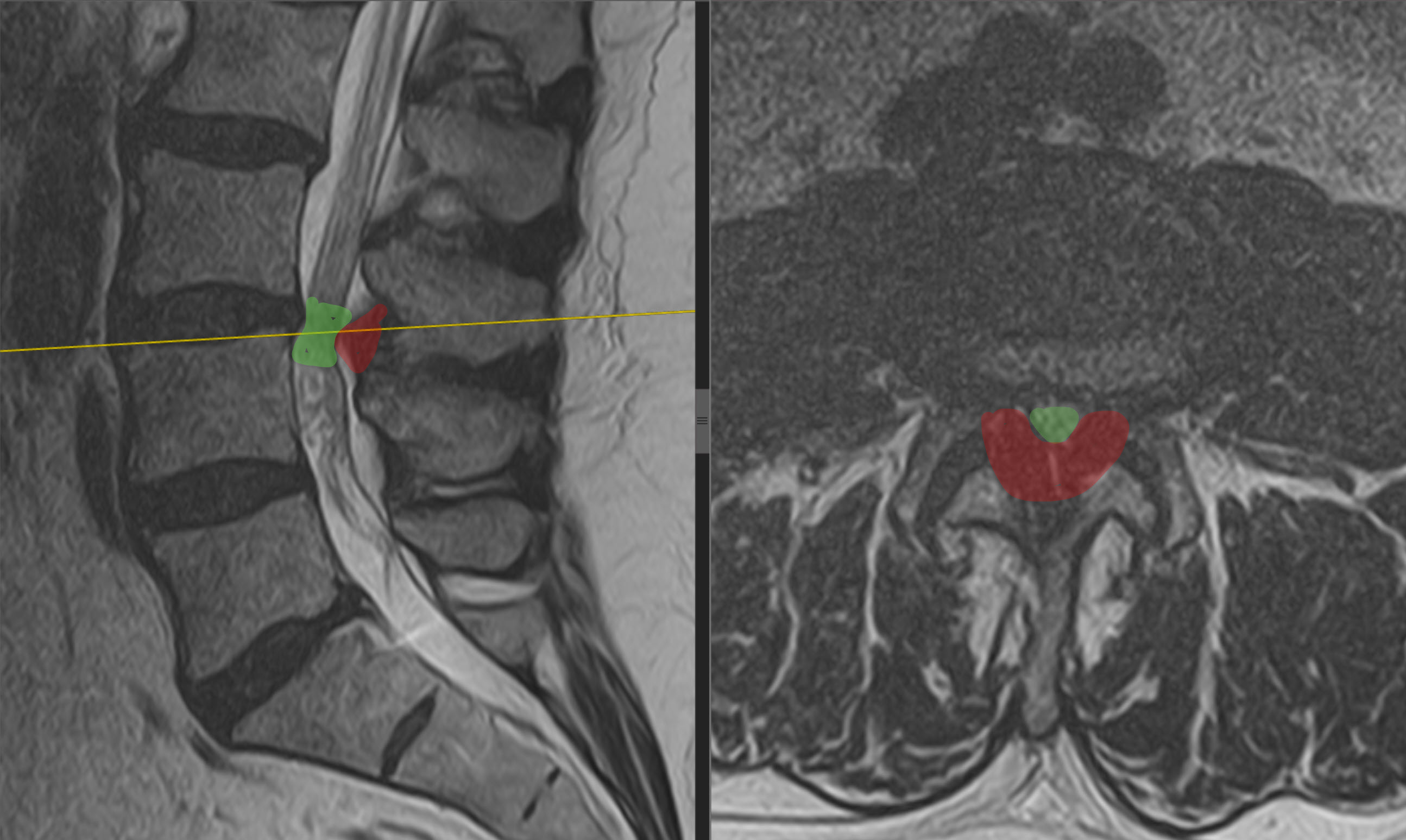
What MRI showed
Preoperative investigations diagnosed L3–L4 lumbar spinal stenosis. The clinical diagnosis also included bilateral L4 radiculopathy and neurogenic claudication.
Surgical treatment
Surgery was selected because conservative treatment had failed for single-level stenosis with bilateral L4 radiculopathy and neurogenic claudication.
Endoscopic biportal decompression was performed at L3–L4.
Initial results after surgery
On the first day, the patient walked and exercised, and his condition was assessed as good. He worked with a rehabilitation specialist in hospital.
Pain and neurological symptoms had decreased by discharge on the second day. The patient reported feeling excellent that day.
The postoperative course was uneventful, with primary wound healing.
| Measure | Before surgery | Early postoperative period |
|---|---|---|
| Pain | In the lower back and both legs; worse with walking and loading | Decreased by discharge on the second day |
| Walking | Distance up to 200 m; weakness after a short walk | Walking and exercising on the first day |
What this case demonstrates
In this patient, longstanding lumbar stenosis caused pain and markedly limited walking. After biportal endoscopic decompression, reduced pain and improved well-being were observed early after surgery. The results presented reflect the first two days following treatment.
Clinical discussion author: Professor Iakiv Vitaliiovych Fishchenko.
Related information
Discuss your case with the professor
Send a description of symptoms and existing investigations. If MRI/CT has already been performed, include the complete DICOM study and report. Preliminary review by the professor is free; an in-person consultation is also possible without an MRI already available.