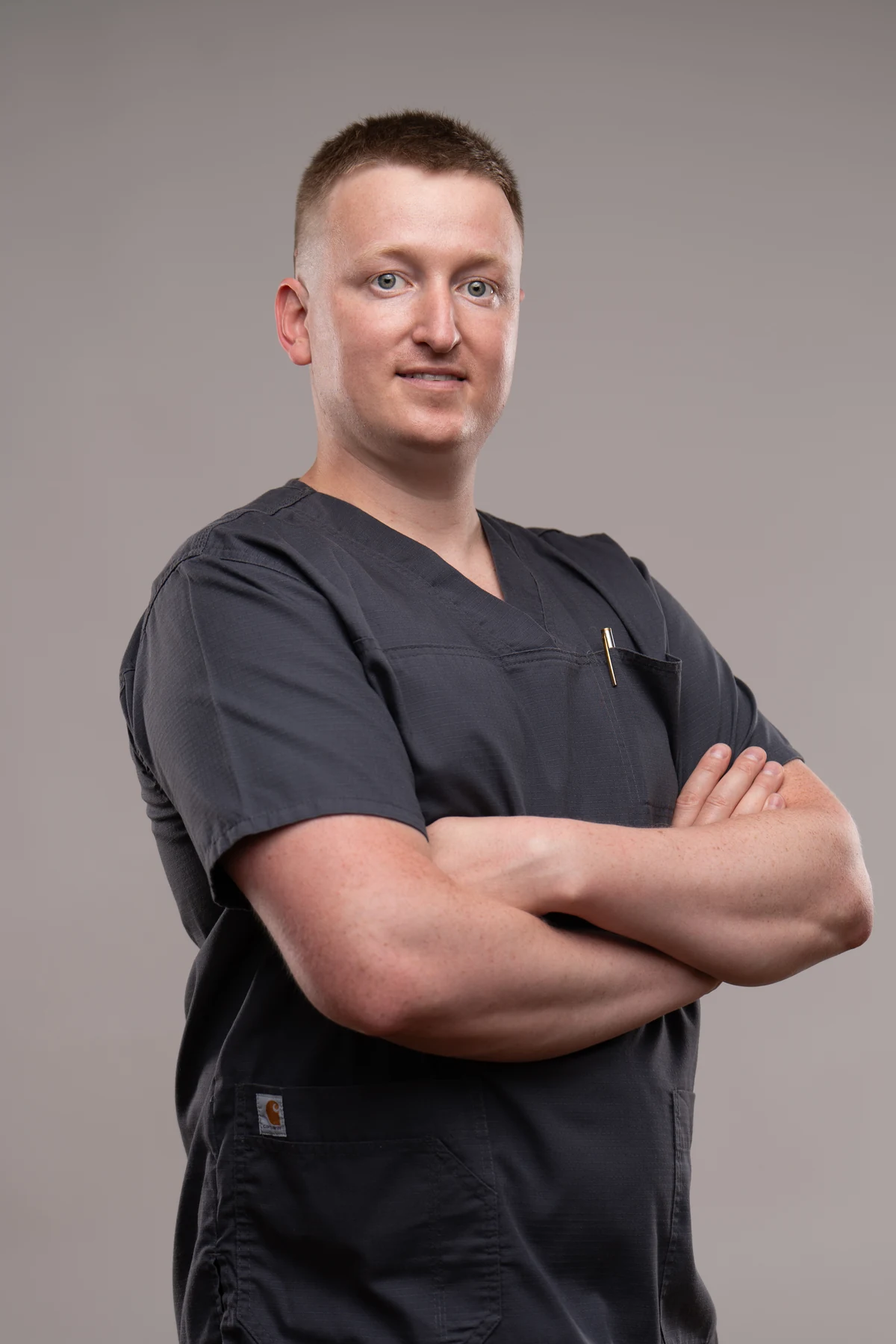
Clear preparation for anaesthesia can help you approach surgery more calmly. Yevhenii Shcheholkov discusses the patient's health, the anaesthetic care plan and postoperative pain relief. You can ask questions in advance and clarify details that matter to you.
Anaesthetist in Professor Fishchenko's team
Yevhenii Eduardovych Shcheholkov is an anaesthetist with a Doctor of Philosophy degree in Medicine (PhD). More than 10 years of experience.
His professional areas are anaesthetic care for spine and chest surgery, regional anaesthesia and multimodal pain relief. Attention to patient preparation and pain control is part of the shared treatment plan.
Within the team, he provides anaesthetic care for endoscopic spine surgery, scoliosis correction and operations for chest deformities.
Care before, during and after surgery
His professional interests also include pain medicine and collaboration between specialists on pain syndromes. Specific methods are discussed after assessing the condition and treatment goals.
What to tell the anaesthetist before surgery
- Which medical conditions you have and which medicines you take regularly. Prepare a list of medicines and doses, including supplements and painkillers.
- Whether you have had allergic reactions, difficulties or unusual symptoms during previous anaesthetics.
- Which operations you have had. Include existing discharge summaries and information about previous procedures.
- Which tests and investigations have already been performed according to the treating team's plan.
- What concerns you most: preparation, waking up, pain after surgery or other questions.
The team will give you instructions on food, fluids and medicines for your operation. Clarify these in advance; agree any changes to regular treatment with your doctor.
What to discuss at the consultation
- The anaesthetic plan. Which approach is proposed and why it suits your procedure.
- Preparation. Which documents are needed, which instructions to follow and when you may last eat and drink.
- The postoperative period. How pain and your general condition will be monitored and whom to tell about discomfort.
- Your individual circumstances. How previous anaesthetic experience, other medical conditions and regular medicines are taken into account in the plan.
The level of monitoring and the recovery plan depend on the operation performed and your condition. Recommendations are agreed by the surgeon, anaesthetist and other involved specialists.
Education and research
He graduated from Bogomolets National Medical University in 2015. From 2015–2017, he undertook an internship at an institution of postgraduate education named after P. L. Shupyk.
In 2024, he defended his dissertation for a Doctor of Philosophy degree in Medicine. The research concerns optimisation of anaesthetic care for endoscopic biportal discectomy.
State dissertation registration record · The ORCID research profile
Discuss preparation for anaesthesia
Describe which procedure is planned and what you would like to clarify. Agree on the consultation format and time when booking.
Direct phone number: +38 (068) 843-95-27.
Appointments and organisational questions: administrator Olena Ihorivna — 094-821-08-30, Administrator's Telegram.
The full team and direct contacts · Professor Iakiv Fishchenko's profile