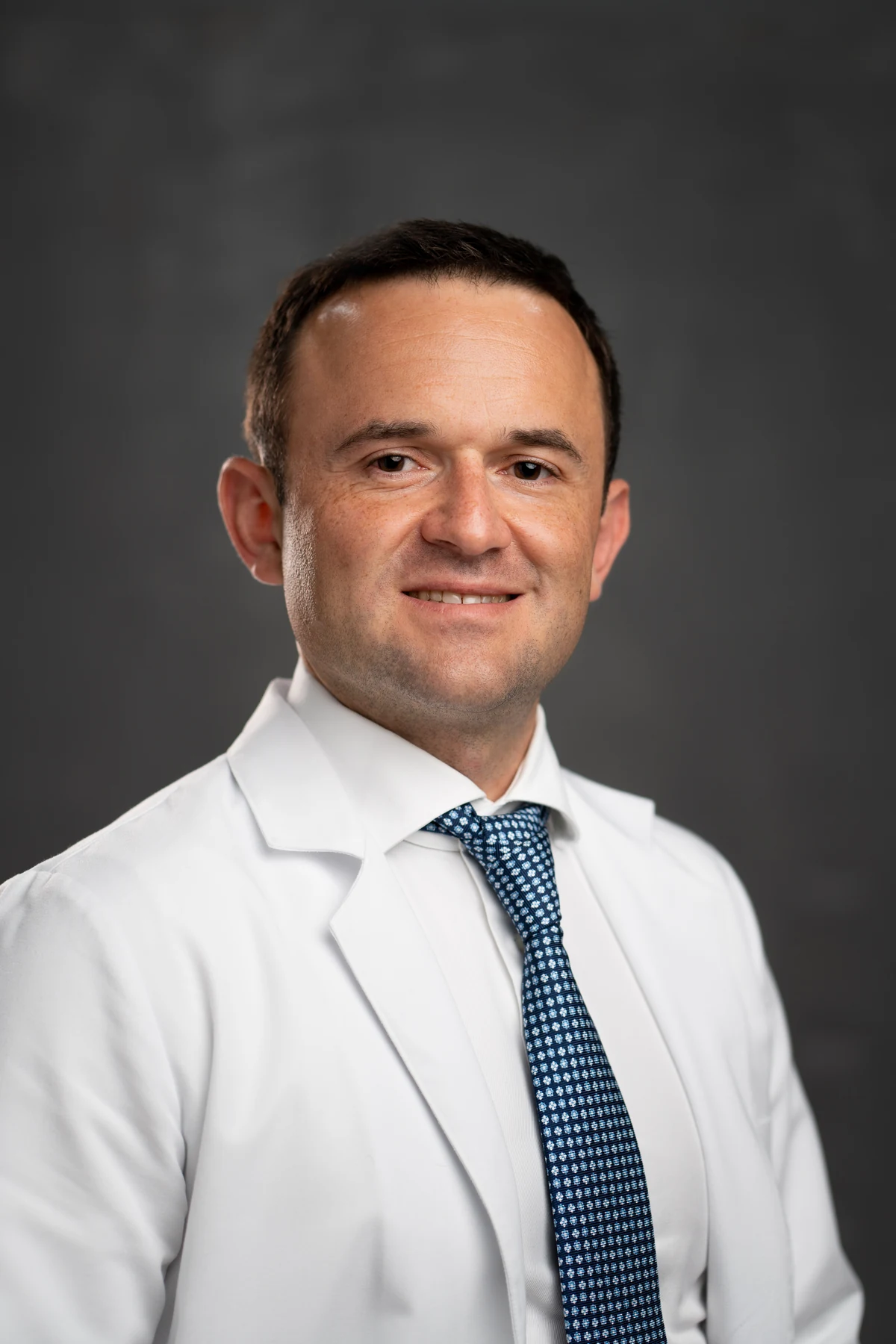
My specialisation is endoscopic spine surgery. If pain, numbness or weakness interfere with everyday life, start with a review of your symptoms and investigations. At the consultation, we will discuss the cause of your symptoms, surgical options and the next treatment step.
Endoscopic spine surgery in Kyiv
Professor Iakiv Fishchenko is a Doctor of Medical Sciences, spine surgeon, orthopaedic trauma surgeon and neurosurgeon. Chief Researcher in the Department of Spine Surgery with the Spinal Neurosurgical Centre at the National Institute of Traumatology and Orthopaedics of the National Academy of Medical Sciences of Ukraine. Clinical practice since 2004.
Personal experience includes more than 3,000 endoscopic spine operations. The main technique is biportal endoscopy, BESS/UBE: the camera and instruments work through two small access points. This provides a magnified view of the operating area and allows targeted decompression of neural structures.
Conditions you can consult us about
A separate area is therapeutic and diagnostic blocks under X-ray guidance and other interventional methods after assessment of the pain source.
How we plan treatment
- We review your history. What is troubling you, how long symptoms have lasted, and what has helped or failed to help.
- We compare examination findings and scans. We determine which changes account for your symptoms and what needs to be addressed.
- We discuss surgery. We explain the approach, extent of the procedure and the role of implants, if needed.
- We agree on preparation and recovery. You receive a clear plan for the next steps, taking your condition and selected treatment into account.
What to prepare for your first enquiry
- Briefly describe your symptoms, their duration and previous treatment.
- If MRI or CT has already been performed, send the complete series in DICOM format and the report.
- For scoliosis, include existing standing whole-spine radiographs in frontal and lateral views, together with previous dated images.
- After a previous operation, include the discharge summary and details of any implanted instrumentation.
Start with the records you already have. We will clarify the need for further investigations after reviewing them.
Step-by-step guide: how to prepare and send CT/MRI studies in DICOM format
Consultation and contact with the team
In-person appointments in Kyiv: 27 Bulvarno-Kudriavska Street, seventh floor, room 702. The appointment date and time are agreed in advance.
Appointments and organisational questions: administrator Olena Ihorivna — 094-821-08-30, Administrator's Telegram.
Private correspondence with the professor: Telegram @ProfFishchenko or fishchenko@gmail.com.
The team and specialists' direct contacts · Contacts, address and map
Education, research and publications
The professor combines clinical practice with research and teaching. His education, career, international training placements, selected publications and interactive atlases are presented in the full biography of Professor Iakiv Fishchenko.
Official profile at the National Institute of Traumatology and Orthopaedics · ORCID
Discuss your treatment with the professor
Send your existing investigations and a brief symptom history. We will start by reviewing your situation and discussing the next step. Preliminary review of records is free.